
Research & Literature
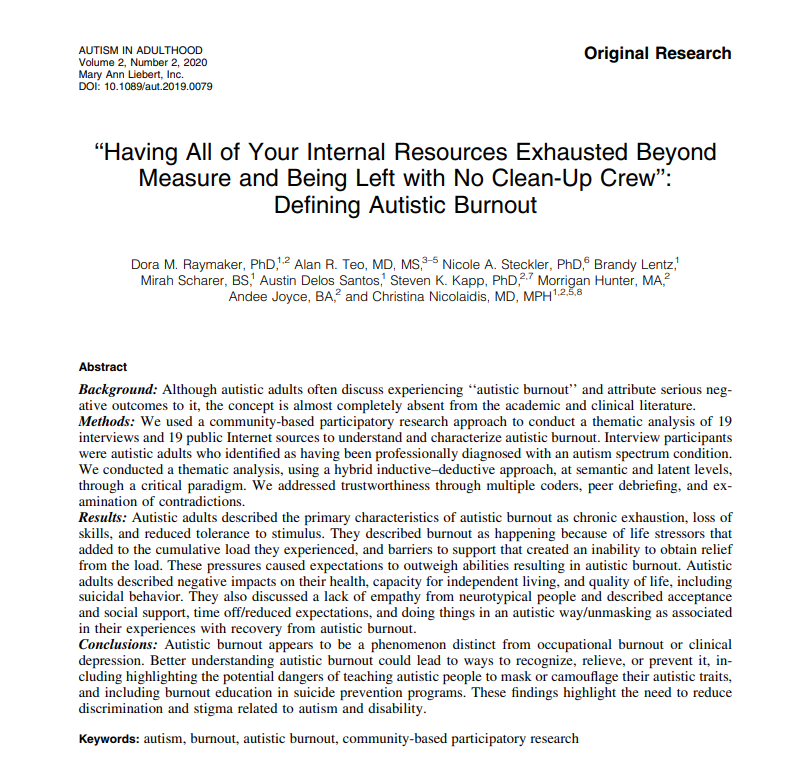
Raymaker et al. (2020) — Defining Autistic Burnout
"Having All of Your Internal Resources Exhausted Beyond Measure and Being Left with No Clean-Up Crew": Defining Autistic Burnout Published in Autism in Adulthood, this landmark study was among the first to formally define autistic burnout as a clinical phenomenon distinct from occupational burnout or depression. It identifies chronic exhaustion, loss of skills, and reduced tolerance to stimulus as its core features and connects burnout directly to masking and the sustained effort of navigating a world not designed for autistic nervous systems. Essential reading for any clinician working with autistic adults.
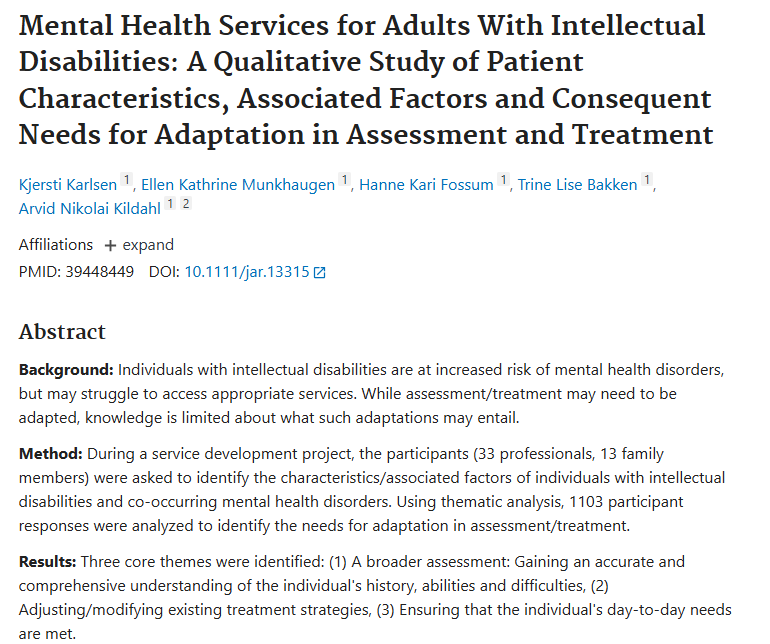
Karlsen et al. (2025) — Mental Health Services for Adults With Intellectual Disabilities
Mental Health Services for Adults With Intellectual Disabilities: A Qualitative Study of Patient Characteristics, Associated Factors and Consequent Needs for Adaptation in Assessment and Treatment Published in the Journal of Applied Research in Intellectual Disabilities, this recent study highlights the need for broader, individualized assessment when working with individuals with intellectual disabilities, finding that focusing on mental health symptoms alone is insufficient and that a comprehensive understanding of the individual's history, abilities, and day-to-day context is essential.
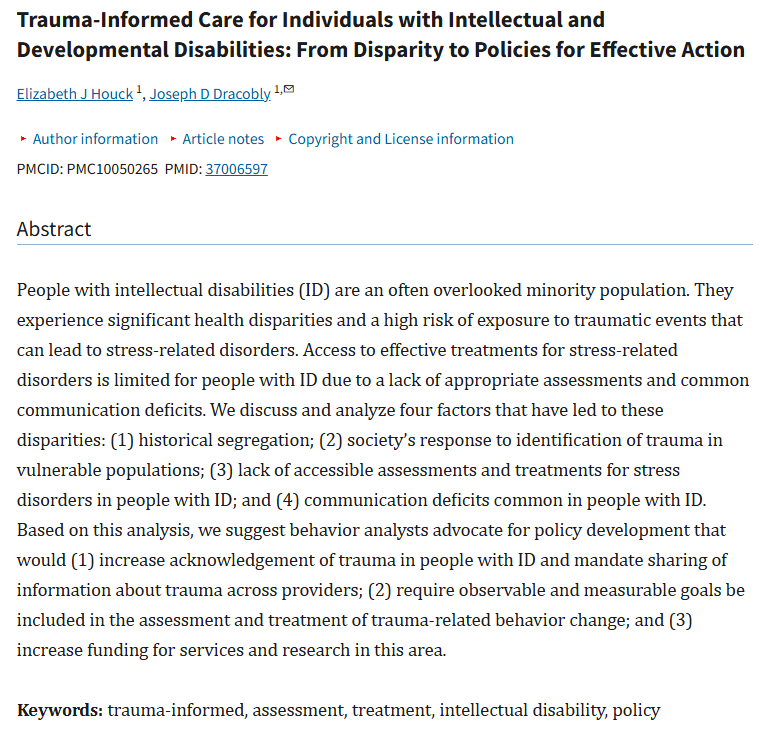
Houck & Dracobly (2023) — Trauma-Informed Care for Individuals With Intellectual and Developmental Disabilities
Trauma-Informed Care for Individuals with Intellectual and Developmental Disabilities: From Disparity to Policies for Effective Action Published in Perspectives on Behavior Science, this open-access article examines why individuals with intellectual and developmental disabilities remain an overlooked and underserved population when it comes to trauma-informed care. The authors identify four key factors driving this disparity, historical segregation, systemic barriers to trauma identification, lack of accessible assessment tools, and communication differences and make concrete policy recommendations for improving trauma-informed practice with this population. Directly relevant for clinicians working to understand why standard trauma frameworks often fall short and what a more responsive approach requires.